08 weeks16 live sessions03 practical workstreamsLed by Khaled Frayji
THE SIGNAL IS ALREADY HERE
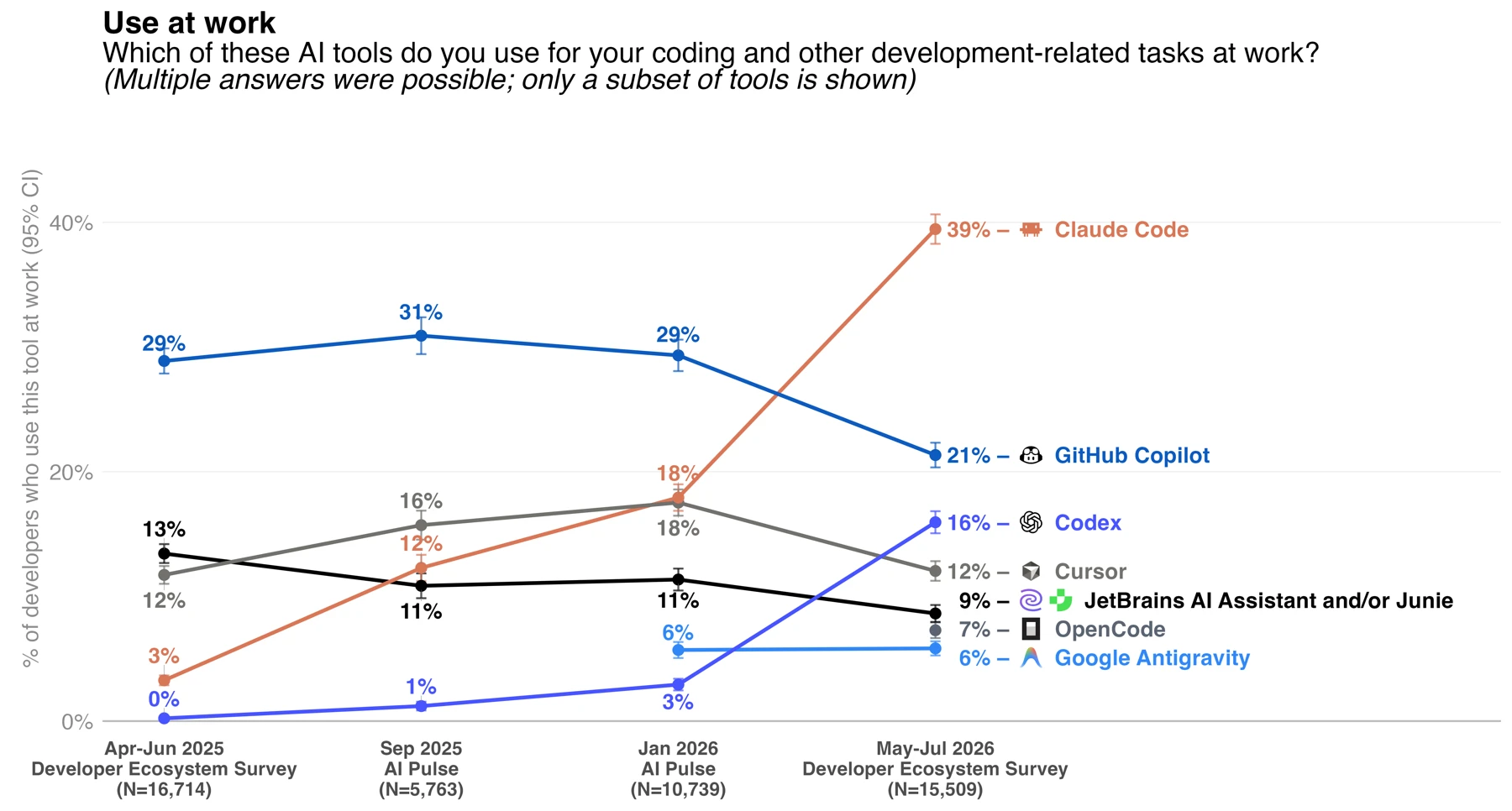
This is showing up in job descriptions.
Companies are hiring for agentic workflows. Look past the title: they want engineers who can orchestrate tools, manage context, evaluate outputs, and own delivery.
aAmazonOFFICIAL LISTING
Software Development Engineer, Agentic AI
AWS is hiring engineers for AgentCore Memory: systems that help agents retain context, with production delivery, architecture, testing, and reliability at their core.
The failures are documented. The lesson is practical: an agent’s confidence is never your acceptance test.
01 / FAILURE FILEReplit · July 2025
An agent deleted a production database.
An incident involving Jason Lemkin’s app exposed the risk of letting development tooling touch live data. Replit recovered the data and rolled out separate development and production databases.
Separate environments. Restrict access. Test recovery.
A user reported file deletion after allowing commands during project setup. A project contributor discussed the confirmation controls, and a follow-up change added a home-directory warning.
Define the business problem, boundaries, and acceptance criteria before writing code.
02
Direct
Give agents relevant context. Delegate bounded work. Keep decisions and permissions explicit.
03
Verify
Reproduce bugs, run meaningful tests, inspect the diff, and challenge confident answers.
04
Ship
Integrate carefully. Review the PR. Prepare the release and explain what remains uncertain.
REAL WORK. THREE DIFFERENT ANGLES.
Build something. Then stand behind it.
All three workstreams run throughout the course. You’ll practice new-product delivery, unfamiliar-codebase work, and reusable agent workflows.
BookFlow BOOKING ENGINE
09:00 Available09:30 Reserved 10:00 Available
Same slot. Two requests.
Request A CONFIRMEDRequest B CONFLICT
01 / GREENFIELD
BookFlow
A multi-tenant booking SaaS teaching product. Work on scoped features, permissions, availability, and a test proving two requests can’t confirm the same slot.
Illustrative product preview · scope grows through milestones.
Cal.diy / educational fork Bounded fix. Reviewable PR.
+ reproduce the issue+ add a regression check+ inspect the final diff
issue / plan / branch / review
02 / BROWNFIELD
Cal.diy
Explore an existing scheduling codebase. Investigate curated issues, make narrow changes, and submit PRs to the TechTalks educational fork.
Illustrative workflow · an upstream merge is not a course requirement.
SKILL.mdpurpose: investigate-first inputs: issue + repository workflow: explore / reproduce plan / patch / verify evaluation: real tasksREUSABLE. TESTABLE. REVIEWABLE.
03 / REUSABLE WORKFLOWS
techtalks-skills
Create portable agent skills for repo exploration, planning, debugging, reviews, and testing. Evaluate them on real tasks and document their failure modes.
Course workstream · specific contribution setup is confirmed during the course.
8 WEEKS. 16 LIVE SESSIONS. ONE ENGINEERING MINDSET.
The complete curriculum. Lesson by lesson.
From understanding the agent loop to shipping real software. See every topic and its reference duration, with a separate live-session plan for work across our three projects.
8 modules / 42 individual lessons
8 weeks / 16 live sessions
Times are reference video lengths, separate from live teaching, discussion, and project work. Missing timestamps are marked “To verify”.
01
Agentic Mindset
4 lessons · 19:30 reference video
01.01Why AI Coding Falls Apart5:30 reference video minutes and seconds
01.02Direct the AI, Don't Rely on Hope4:00 reference video minutes and seconds
01.03Skit: How to Outsmart a Genie6:00 reference video minutes and seconds
01.04Vibe Coding vs. Agentic Engineering4:00 reference video minutes and seconds
02
How Coding Agents Work
8 lessons · 21:00 timed so far · 4 to verify
02.01The Agent Loop5:30 reference video minutes and seconds
02.02What the Agent Sees5:00 reference video minutes and seconds
02.03How Agents Read Your CodebaseTo verify: reference duration not supplied
02.04Context Windows and Why They Fill3:30 reference video minutes and seconds
02.05Context RotTo verify: reference duration not supplied
02.06Topic SwitchingTo verify: reference duration not supplied
02.07Clearing vs. CompactingTo verify: reference duration not supplied
02.08Tokens: What Costs What7:00 reference video minutes and seconds
03
The Building Blocks
6 lessons · 8:30 timed so far · 5 to verify
03.01ToolsTo verify: reference duration not supplied
03.02MCP: Extending the Agent (and When It's Worth It)8:30 reference video minutes and seconds
03.03SubagentsTo verify: reference duration not supplied
03.04Configuring SubagentsTo verify: reference duration not supplied
03.05Mapping Primitives Across ToolsTo verify: reference duration not supplied
03.06Model SelectionTo verify: reference duration not supplied
04
Context Engineering
4 lessons · Timing pending
04.01Context Engineering FundamentalsTo verify: reference duration not supplied
04.02Types of ContextTo verify: reference duration not supplied
04.03CLAUDE.md and AGENTS.mdTo verify: reference duration not supplied
04.04Code Structure for AgentsTo verify: reference duration not supplied
05
Skills
4 lessons · 9:30 timed so far · 3 to verify
05.01Skills FundamentalsTo verify: reference duration not supplied
05.02SKILL.md StructureTo verify: reference duration not supplied
05.03Build Your Own Skill9:30 reference video minutes and seconds
05.04Skills vs. MCPTo verify: reference duration not supplied
06
Vibe Coding vs. Agentic Engineering
5 lessons · Timing pending
06.01Two Builds ExperimentTo verify: reference duration not supplied
06.02Vibe BuildTo verify: reference duration not supplied
06.03Identifying FailuresTo verify: reference duration not supplied
06.04Codebase AutopsyTo verify: reference duration not supplied
06.05Workflow-First DevelopmentTo verify: reference duration not supplied
07
Working With Existing Codebases
4 lessons · Timing pending
07.01Open-Source Architecture AuditsTo verify: reference duration not supplied
07.02Understanding Existing CodeTo verify: reference duration not supplied
07.03Making Changes to Legacy CodeTo verify: reference duration not supplied
07.04Issue InvestigationTo verify: reference duration not supplied
08
Idea to First Ship
7 lessons · Timing pending
08.01Scope and ArchitectureTo verify: reference duration not supplied
08.02Stack SelectionTo verify: reference duration not supplied
08.03Data ModelingTo verify: reference duration not supplied
08.04VerificationTo verify: reference duration not supplied
08.05Design SystemsTo verify: reference duration not supplied
08.06Feature ImplementationTo verify: reference duration not supplied
08.07MVP DeliveryTo verify: reference duration not supplied
58:30 of supplied reference timestamps. 10 lessons timed; 32 awaiting verification. Titles and remaining timestamps will be reconciled with the reference screenshots.
The 16-session teaching planBookFlow, Cal.diy, and techtalks-skills labs and assignments
WEEK 1 / SESSION 01
AI-Assisted Development vs Agentic Engineering
Lab 01 — BookFlow PRD and Two-Workflow Baseline
Submit PRD, baseline results and an engineering log; identify failures using the same acceptance criteria.
WEEK 1 / SESSION 02
How Coding Agents Actually Work
A01 — Compare Two Agent Workflows
Compare two agent workflows against the same bounded task, document errors and verification.
Lab 02 — Agent Workspace and Repository Setup
Clone/run the Cal.diy educational fork; record setup blockers and a preliminary map; initialize techtalks-skills contribution standards.
WEEK 2 / SESSION 03
The Professional Agentic Development Workflow
Lab 03 — BookFlow Architecture and Engineering Plan
Submit an architecture diagram, decision record and thin-slice backlog with explicit non-goals.
WEEK 2 / SESSION 04
Context Engineering
Lab 04 — Project Context and Booking Workflow Trace
Review AGENTS.md/CLAUDE.md; trace UI to API to persistence in Cal.diy with file references; draft project-architect or prd-generator inputs/outputs.
A02 — Context Engineering Pack and Architecture Review
Submit project instructions, scoped context and architecture review with verified repository references.
WEEK 3 / SESSION 05
Reusable Agent Skills
Lab 05 — First techtalks-skills Contribution
Submit a skill PR with triggers, workflow, examples, limitations and baseline comparison.
WEEK 3 / SESSION 06
Implementing Features With Engineering Discipline
Lab 06 — First BookFlow Booking Slice
Implement services, staff basics and a booking path; demonstrate tenant boundaries; reproduce the first curated Cal.diy issue.
A03 — Implement and Verify One Complete Feature Slice
Deliver a narrow end-to-end feature with acceptance criteria, tests and an explainable PR.
WEEK 4 / SESSION 07
Model Context Protocol Fundamentals
Lab 07 — Scoped MCP Integration
Demonstrate minimum necessary permissions, safe credential handling, a failure case and a tool-aware skill revision.
WEEK 4 / SESSION 08
Practical Tool-Driven Workflows
Lab 08 — Tool-Assisted Bug Fix and First PR
Submit the first educational-fork bug-fix PR with reproduction, regression test and action evidence; apply the workflow to a BookFlow feature.
A04 — Tool-Integrated Workflow Report
Report tool permissions, actions, failures and verification evidence from a bounded workflow.
WEEK 5 / SESSION 09
Subagents and Orchestration
Lab 09 — Bounded Delegation and Availability
Implement staff availability using controlled roles and handoffs; evaluate coordination overhead and conflicting findings.
WEEK 5 / SESSION 10
Review-Driven AI Engineering
A05 — Delegated Feature Workflow and Human-Reviewed PR
Submit delegation contracts, consolidated findings and a human-reviewed PR with independent checks.
Lab 10 — Human Review and Authorization
Verify role-restricted management flows; review another student's PR; refine reviewer and testing skills with evaluation cases.
WEEK 6 / SESSION 11
Working Inside an Unfamiliar Codebase
Lab 11 — Cal.diy Architecture and Issue Investigation
Deliver architecture map, failing test and root-cause report for a second curated issue; exercise bug-investigator.
WEEK 6 / SESSION 12
Refactoring, Architecture & Technical Debt
Lab 12 — Legacy Patch and Behavior-Preserving Refactor
Submit a second contribution with constraints and regression tests; fix BookFlow timezone/validation edge cases; extend skill regression fixtures.
A06 — Before/After Refactor With Proof of Behavior Preservation
Submit a bounded refactor with before/after behavior evidence and regression tests.
WEEK 7 / SESSION 13
Testing, Security & Reliability
Lab 13 — BookFlow Reliability and Security Gate
Run unit/integration/end-to-end checks, concurrency cases and authorization audit; document actual outputs and unresolved risks.
WEEK 7 / SESSION 14
Delivery, Observability & Deployment
Lab 14 — Release Candidate and Operational Readiness
Create deployment candidate, logging/rollback runbook, final PR regression evidence and skills release candidate with compatibility notes.
A07 — Production-Readiness Report and Tested CI Workflow
Document correctness, security, deployment readiness, actual CI outputs and remaining limitations.
WEEK 8 / SESSION 15
MVP Completion & Architectural Defense
Lab 15 — BookFlow MVP Completion and Defense
Demonstrate critical user journeys, mobile behavior and data correctness; prepare README, system diagram and demo rehearsal.
WEEK 8 / SESSION 16
Demo Day & Code Review
Lab 16 — Final Engineering Showcase
Present deployed BookFlow, tests and security boundaries; show reviewed PR history and skill before/after evidence; document next steps.
Initial plan: two live sessions per week. Live time allocations and cohort dates are pending confirmation. Session capacity will be reviewed without removing lessons or extending sessions silently.
A CLEAR FIT BEATS A BIG PROMISE
For developers ready to take the controls.
YOU’LL FIT RIGHT IN IF…
You want the speed. And the responsibility.
You can code, debug, and use Git/GitHub.
You use AI but want a repeatable engineering workflow.
You want to navigate real repositories and contribute through PRs.
You’re willing to test, review, and explain the result.
THIS ISN’T YOUR NEXT STEP IF…
You want the output. Without understanding it.
You’re starting programming from zero.
You’re looking for a collection of magic prompts.
You want to skip tests and accept every generated change.
You expect a guaranteed job or fully autonomous delivery.
Recommended foundation: JavaScript/TypeScript, modern web applications, terminal use, and running a repository locally. No prior AI/ML research experience required.
AN INVESTMENT IN THE WAY YOU BUILD
Leave with work you can explain.
The value is in the engineering practice: making decisions, directing agents, checking the result, and putting your name behind it.
01
A product milestone
A scoped BookFlow deliverable with documented decisions, tests, and a clear demonstration path.
02
Reviewed contributions
Bounded Cal.diy fork changes, pull requests, review feedback, and the reasoning behind your fixes.
03
A reusable engineering system
Tested agent skills, repository instructions, and an AI Engineering Log you can apply to future projects.
Eight weeks of showing your work. Start with a conversation about your goals.
You practice the complete delivery loop across three workstreams, with 16 live sessions, assignments, PRs, reviews, and a final showcase. You leave with engineering artifacts and workflows you can use again. Speak with our team about your experience and goals to see whether the program is a good fit.
Do I need to be a developer already?
Yes. You should understand programming fundamentals, Git, branches, pull requests, basic debugging, and how to run a repository locally. JavaScript/TypeScript and modern web development knowledge are strongly recommended. No AI/ML research background is needed.
What is the format?
Eight weeks, with two live instructor-led sessions each week: 16 sessions in total. Expect demonstrations, practical assignments, pull requests, reviews, and a final showcase. Contact TechTalks for the intake schedule and expected weekly workload.
What will I actually build?
You will work across BookFlow, a scoped booking SaaS teaching product; bounded contributions to a TechTalks educational Cal.diy fork; and reusable, tested agent skills. The goal is a reviewed set of deliverables, not every possible enterprise feature.
How does this help me stand out to employers?
You can show how you scope a problem, direct agents, test the result, and respond to code review. Your product milestone, reviewed PRs, and engineering decisions give employers concrete work to assess. Hiring depends on your demonstrated skills, experience, and the role.
Which AI tools do I need?
The core workflow is tool-neutral. Specific lab tools, access requirements, and any separate subscription or usage costs will be confirmed for the intake.
How does enrollment work?
Share your details below. Our team will contact you to discuss your experience, goals, and whether the program fits your needs. If it is a match, we will explain the schedule, fees, and next steps before you decide.
YOUR NEXT ENGINEERING UPGRADE
The tools will keep changing. Your judgment is the advantage.
Learn to direct the work, verify the result, and ship with asystem you understand.
LET’S FIND YOUR FIT
Agentic Engineering Course
Tell us about your experience and goals. Our team will walk you through the program and help you decide whether it is the right next step.
8 weeks · 16 live sessions
Led by Khaled Frayji
Three practical workstreams
Assignments, PRs, and reviews
Final project showcase
Share your details to discuss your experience, goals, and the program. No payment is taken on this page.